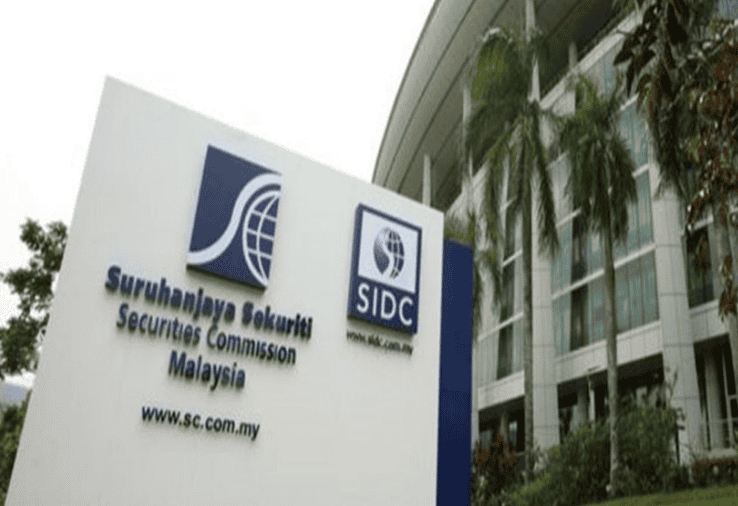
KUALA LUMPUR, Aug 11 – The declassified Royal Commission of Inquiry (RCI) report into Lembaga Tabung Haji has confirmed what many suspected for years: a RM4.8 billion gap between what the fund reported and what it actually held, hibah payments that quietly returned depositors’ own principal to them disguised as profit, and a pattern of political interference that the commission itself singles out as the primary driver of the collapse.
Tabung Haji’s defenders — and, uncomfortably, the Securities Commission’s own defenders — will point out that Tabung Haji itself was never licensed or registered with the Securities Commission, and that its core investment management function operated under the Tabung Haji Act 1995 rather than under Securities Commission supervision. That much is true, and it matters: the RCI’s own recommendation is to bring Tabung Haji’s investment arm under Securities Commission oversight for the first time, which tells you plainly that this oversight didn’t exist before.
But that jurisdictional gap is not the full story, and it should not become a blanket alibi. Where the Securities Commission’s authority did reach — Tabung Haji’s listed holdings, its related-party dealings, its conduct as a substantial shareholder — the record so far shows no evidence of the Securities Commission using that authority with anything like the urgency the situation demanded. A regulator does not need jurisdiction over an entire institution to notice when governance failures fester for years inside companies it does directly regulate. It only needs to be paying attention. On what’s known so far, the Securities Commission wasn’t.
Where the Securities Commission Had Real Power — and Stayed Silent
The RCI’s recommendation to bring Tabung Haji’s investment arm under Securities Commission oversight is forward-looking. It says nothing about what the Securities Commission could have done during the period the RCI actually investigated, 2014 to 2020 — because two of Tabung Haji’s most troubled holdings didn’t need that recommendation to fall under the Commission’s authority. They already did.
Listed holdings, already regulated. FGV Holdings Bhd and TH Plantations Bhd — both named among 14 investments the RCI wants forensically audited — were public listed companies throughout the entire period in question. As listed issuers, they were already bound by the Capital Markets and Services Act’s disclosure obligations, related-party transaction rules, and governance requirements, all directly enforceable by the Securities Commission. No new mandate, no RCI recommendation required. If governance failures or misrepresentations to the market ran through these companies — and the RCI’s own forensic-audit list suggests exactly that kind of scrutiny is overdue — the Securities Commission had the tools to catch it in real time. Whether it did is not publicly known.
Everyone else has spoken. The Securities Commission hasn’t.
Since the report’s declassification on July 29, the Attorney General’s Chambers has announced it will review the findings for prosecution. MACC has arrested and interrogated former executives over an RM370 million plantation share purchase named in the report. The King has decreed a full investigation. Rafizi Ramli — who has since resigned as an MP and left the ruling coalition entirely — has publicly called for forensic probes “alongside criminal probes involving MACC, Securities Commission Malaysia, Royal Malaysia Police, Bank Negara Malaysia and other relevant enforcement agencies.” Through all of it, the one regulator with undisputed jurisdiction over Tabung Haji’s listed holdings has said nothing.
Regulators can work quietly. But when a former minister names the Securities Commission directly and every other agency has already gone public, silence stops being neutral. It’s a question the Commission now owes an answer to.
What Was Genuinely Outside Its Reach
To be fair — and precise, because precision is what will make this critique stick — some of the rot sat entirely outside the Securities Commission’s jurisdiction. The accounting treatment that let Tabung Haji report a RM3.4 billion profit in 2017 against what the RCI says should have been a RM1.4 billion loss, the internal governance failures, the ministerial control over board appointments, and non-listed investments such as Trurich Resources and PT TH Indo Plantations, were never the Securities Commission’s to police. Those failures belong to the Finance Ministry as Tabung Haji’s statutory supervisor, the Auditor-General, Bank Negara Malaysia, the Companies Commission of Malaysia, and now the MACC and police.
Drawing that line matters, because conflating it with what the Securities Commission did control only hands the Commission an easy defence. The stronger case — the one that survives scrutiny — is the narrower one: on the listed-company and market-conduct end of this affair, where the Securities Commission’s authority was never in doubt, it sat on its hands.
What the Securities Commission Must Now Answer For
- Explain, publicly, why FGV Holdings Bhd and TH Plantations Bhd — listed companies under its direct jurisdiction throughout the period in question — were not flagged for closer disclosure or governance scrutiny, given that the Securities Commission’s authority over those companies was never in question.
- Disclose whether any surveillance of insider dealing or market misconduct was ever conducted on Tabung Haji-linked counters, and if not, why holdings connected to an institution moving billions in public deposits through listed markets escaped that scrutiny entirely.
- Use its existing enforcement powers now — retroactively, if necessary — against any market misconduct the forensic audits uncover, rather than letting MACC’s corruption probe carry the whole weight of accountability.
- Support the RCI’s recommendation to bring Tabung Haji’s future investment arm fully under Securities Commission licensing, and commit to the resourcing and independence needed to make that oversight real rather than nominal.
The Real Lesson
The Tabung Haji scandal is, in part, a story about a regulator that was never given jurisdiction over the institution’s core operations. But it is also, unavoidably, a story about a regulator that had clear authority over Tabung Haji’s listed dealings and has, so far, said nothing publicly about how — or whether — it used it. Lack of jurisdiction explains only part of what happened here. The rest is a question the Securities Commission owes the public a direct answer to: what oversight, if any, did you exercise over the listed companies at the center of this scandal — companies you regulated the whole time?
Until the Securities Commission answers that question, “we didn’t have jurisdiction” is not a complete alibi. It’s an answer to only part of the question.
–NMT

More Stories
Bursa Malaysia Closes Below Key 1,600 Threshold As Foreign Selling Hits Banks
Has The Edge Malaysia Lost Its Edge on Turiya?
Govt Aims To Table Anti-Rent-Seeking Bill By 2027 To Eliminate ‘Alibaba’ Licensing Practices