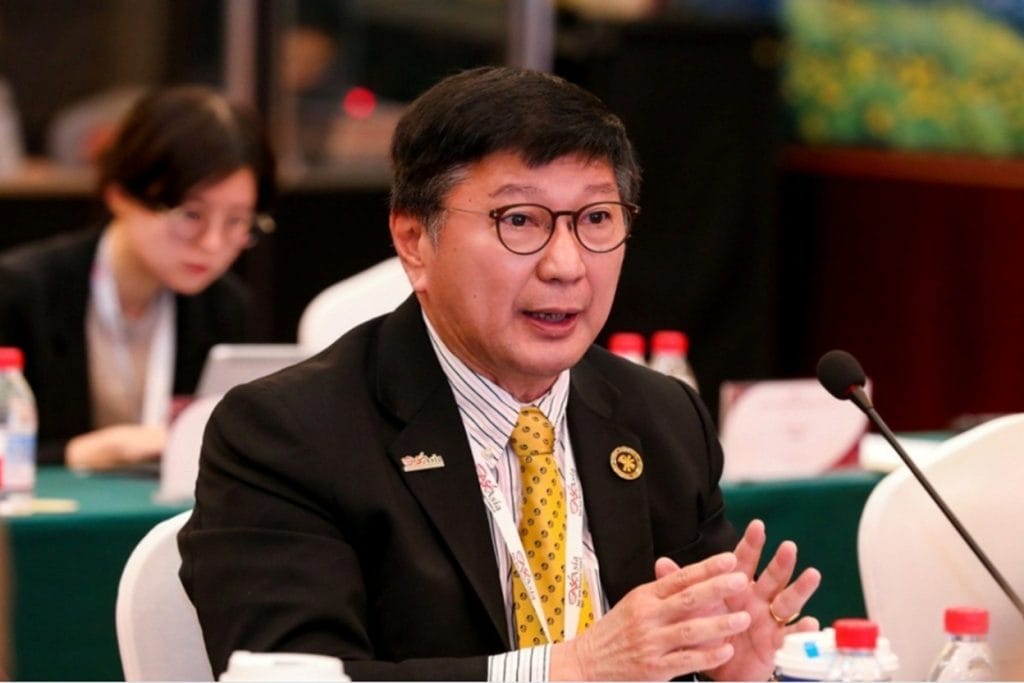
KUALA LUMPUR, Sept 21 — The ASEAN Supply Chain Council has officially transitioned into a permanent working structure under the ASEAN Business Advisory Council (ASEAN-BAC), marking a significant milestone in institutionalizing private-sector engagement on trade facilitation, economic integration, and supply-chain resilience across Southeast Asia.
The institutional transition was formally marked at the 3rd ASEAN Supply Chain Council Meeting in Manila, Philippines, where Tan Sri Soh Thian Lai, founding chairman of the ASEAN Supply Chain Council and Chairman of the ASEAN Manufacturing Network (AMN), handed over the council’s leadership to Michael Tan of ASEAN-BAC Philippines.
In an official statement released in Kuala Lumpur, Soh highlighted that the Manila meeting focused on reviewing the terms of reference and work program designed to guide the council’s next operational phase, establishing a direct channel for private-sector recommendations to feed into formal ASEAN policy mechanisms.
The ASEAN Supply Chain Council was initially formed through the ASEAN Manufacturing Network to serve as a structured private-sector platform focused on identifying cross-sector supply-chain bottlenecks, resolving operational trade barriers, and formulating actionable policy recommendations for regional governments.
Since its establishment, the council’s scope of work has expanded to address key operational priorities across Southeast Asian markets. These include trade facilitation, customs efficiency, digital trade expansion, product traceability, regulatory alignment, streamlined border processes, and the cross-border movement of technical talent.
Soh noted that integrating the council permanently under the ASEAN-BAC framework guarantees the necessary structural continuity to advance regional supply chain initiatives beyond individual national chairmanship cycles. This setup enables sustained collaboration among ASEAN business representatives, joint business councils, regional industry associations, and multinational corporations operating across regional supply chains.
The permanent integration also establishes a direct pipeline for private-sector policy submissions to reach relevant ASEAN sectoral bodies, the ASEAN Economic Ministers, and regional heads of state during ASEAN Summit gatherings.
Emphasizing that Southeast Asia already possesses the core foundational structures for deeper economic integration, Soh stated that the immediate priority must focus on ensuring those frameworks function effectively for active businesses, adding that placing the work on a permanent footing allows ASEAN to maintain momentum and translate real-world private-sector experiences into practical regional policy.
– NMT



More Stories
Financial And Healthcare Heavyweights Push Bursa Malaysia Higher At Closing
Bursa Malaysia Rebounds At Midday Driven By Financial Counter Rally And Budget Optimism
Global Economic Growth To Decelerate To 3.1 Per Cent In 2026 Before Rebounding In 2027, Says IMF