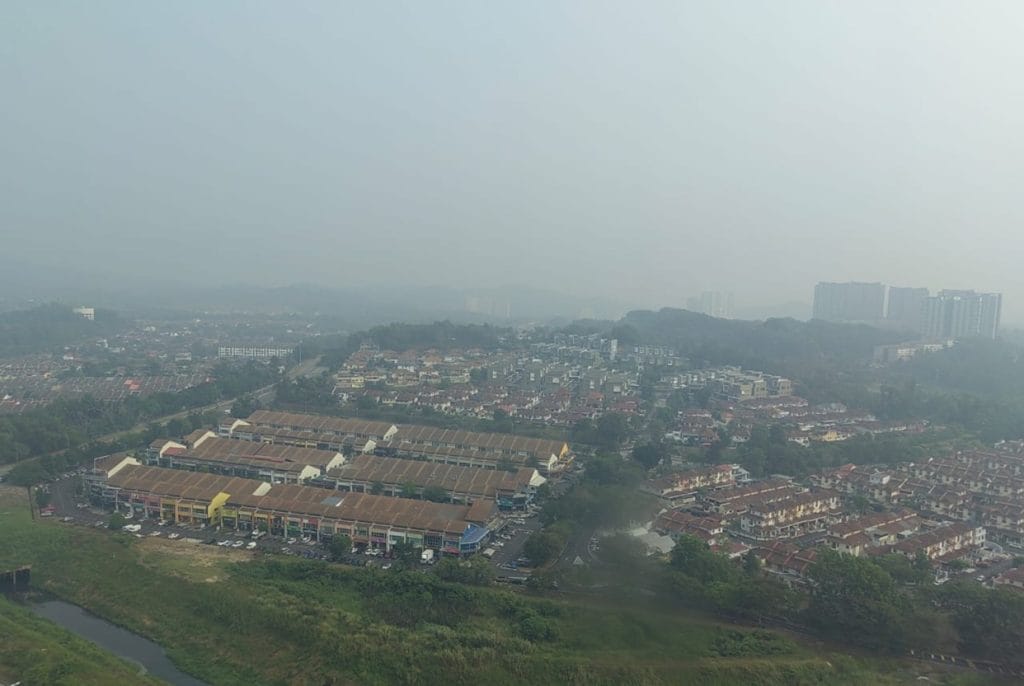
KUALA LUMPUR, Oct 17 – A total of 24 monitoring stations across Malaysia recorded unhealthy Air Pollutant Index (API) readings as of 9:30 AM on Saturday, October 17, 2026, with Pasir Gudang in Johor nearing the “very unhealthy” threshold with the country’s highest reading of 196.
Data published on the Department of Environment’s (DOE) Air Pollutant Index Management System (APIMS) portal revealed that haze conditions remain elevated across central and southern Peninsular Malaysia, as well as parts of Sabah.
In addition to Pasir Gudang, seven other stations in Johor breached unhealthy benchmarks, including Larkin (177), Pengerang (174), Kota Tinggi (172), Batu Pahat (170), Tangkak (168), Segamat (161), and Kluang (159).
In the Klang Valley, air quality deteriorated across multiple urban centers, with Cheras in Kuala Lumpur and Putrajaya both posting readings of 162, while Batu Muda registered 159. In Selangor, Klang peaked at 171, Johan Setia at 170, Petaling Jaya and Shah Alam at 169 each, and Banting at 153.
Regional Breakdown, API Thresholds, and Nationwide Air Quality Status
The worsening transboundary and localized haze has affected multiple states across the country:
- Negeri Sembilan Readings: Nilai logged the state’s highest API reading at 173, closely followed by Seremban at 172 and Port Dickson at 157.
- Melaka Air Quality: All three monitoring stations in Melaka recorded unhealthy conditions, led by Melaka City at 169, Bukit Rambai at 166, and Alor Gajah at 165.
- Sabah Haze Levels: In East Malaysia, Sandakan and Tawau registered unhealthy API levels of 156 and 150, respectively.
- Nationwide Overview: Out of 68 monitoring stations across the nation, 43 areas recorded moderate air quality, while only a single location maintained a good reading.
- API Classification Scale: Standard DOE guidelines define API values from 0–50 as Good, 51–100 as Moderate, 101–200 as Unhealthy, 201–300 as Very Unhealthy, and 300 and above as Hazardous.
Health authorities advise residents in affected areas, particularly high-risk groups such as children, the elderly, and those with respiratory conditions, to limit outdoor physical activity and wear protective face masks.
-NMT


More Stories
National Registration Department Urges Public To Stop Spreading Misleading Narratives Over Recirculated 2023 Video
Road Transport (Amendment) Act 2026 Takes Effect Today With Tougher Penalties For Street Racing And ‘Tonto’ Syndicates
Weststar Group, UPNM, And UTP Explore Strategic Tripartite Partnership In Defence Tech And Energy Security