KUALA LUMPUR — The controversial Jana Wibawa programme was formally introduced to the Cabinet during a ministerial meeting chaired by Tan Sri Muhyiddin Yassin on November 13, 2020, the High Court heard today.
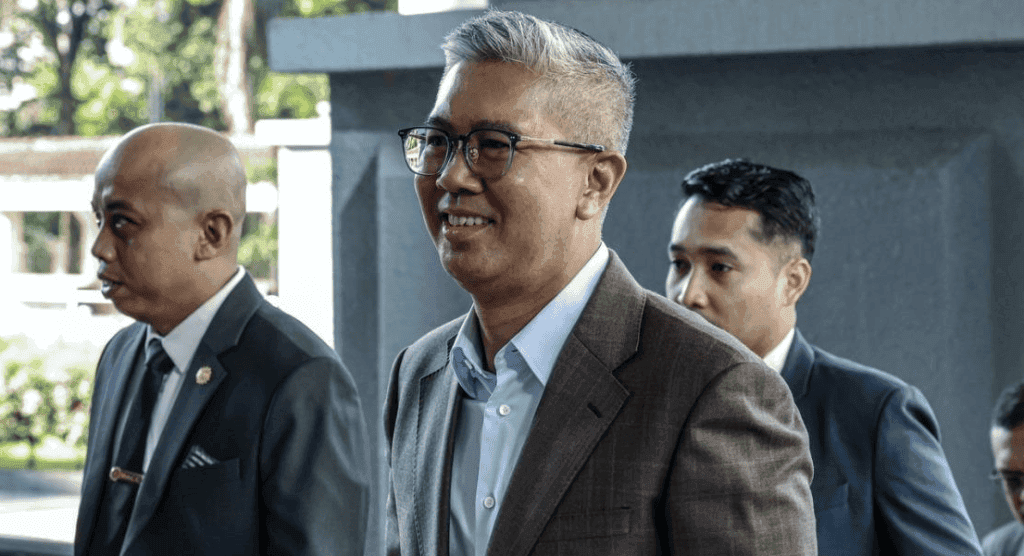
Testifying as the 11th prosecution witness, former Finance Minister Tengku Datuk Seri Zafrul Tengku Abdul Aziz confirmed the timeline, noting that it marked the first time the economic stimulus package was collectively discussed by the administration during his tenure at the Treasury. When questioned by Deputy Public Prosecutor Datuk Wan Shaharuddin Wan Ladin regarding the sensitivity of the discussions, Tengku Zafrul maintained that all Cabinet meetings remain strictly confidential under government protocols.
The multi-million ringgit legal battle involves Muhyiddin, 79, who faces seven combined counts of abuse of power and money laundering tied to the pandemic-era construction scheme.
During a rigorous cross-examination by defense counsel Datuk Amer Hamzah Arshad, Tengku Zafrul conceded that meeting minutes do not operate as mandatory, binding executive directives. The witness acknowledged that he routinely received a significant volume of general meeting minutes from Muhyiddin throughout their time in office.
Amer Hamzah: How many minutes of meetings have you received from Tan Sri Muhyiddin? Tengku Zafrul: I’m not certain… many.
A central pillar of the defense’s argument gained traction when Tengku Zafrul agreed that no evidentiary trail had been presented to the prosecution proving Muhyiddin held any personal or financial stake in the 54 contractors recommended for the projects. While the former premier had issued letters proposing those specific companies undergo direct negotiation, Tengku Zafrul clarified that the businesses were still bound by standard government financial and procurement evaluation procedures.
The witness defended the baseline deployment of direct negotiations, agreeing with the defense that it remains a recognized practice reserved for national security, public interest, and urgent national circumstances. He further agreed that an individual minister lacks the unilateral authority to fully execute such projects without higher institutional approvals.
Detailing the economic backdrop of the policy, Tengku Zafrul explained that Jana Wibawa was launched as an emergency lifeline to revitalize Bumiputera contractors and building material suppliers whose operations were crippled by the COVID-19 lockdown.
“You can see the difficulties faced by Small and Medium Enterprises, Bumiputera contractors, and the entire ecosystem. It was based on these concerns and considerations that we proposed Jana Wibawa,” he testified, confirming the economic aid was designed to trigger a trickle-down effect.
Muhyiddin stands accused of four counts of utilizing his position as Prime Minister and Bersatu president to solicit RM232.5 million in bribes from Bukhary Equity Sdn Bhd, Nepturis Sdn Bhd, Mamfor Sdn Bhd, and Datuk Azman Yusoff. The alleged offences under Section 23(1) of the MACC Act 2009 carry a maximum 20-year jail sentence upon conviction. The Pagoh MP also faces three counts under AMLA for allegedly receiving RM200 million in illegal proceeds across accounts in Petaling Jaya and Kuala Lumpur.
The trial before High Court Judge Noor Ruwena Md Nurdin will resume tomorrow morning.
-NMT




More Stories
Teenager With Disabilities Ordered to Undergo Psychiatric Evaluation Over Death of Disabled Mother
Former FELDA Director-General Charged Over RM-Multi-Million Jalan Semarak Land Transfer
Former Senior Executive to Face Court Charges Over RM42 Million UiTM Holdings Losses