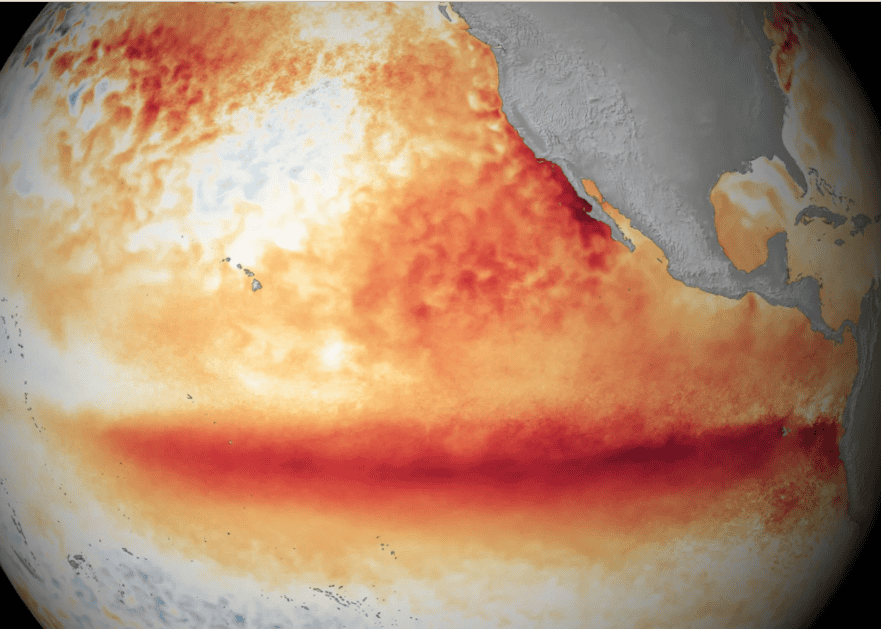
PUCHONG, July 7 — Malaysia’s primary disaster management platforms have been placed on high alert as the government prepares for the possible onset of a catastrophic ‘Super El Nino’ climate phenomenon later this year. Simultaneously, emergency personnel are accelerating targeted field measures to actively mitigate the critical risks of extreme heatwaves, toxic transboundary haze, and uncontrolled open burning throughout the ongoing Southwest Monsoon cycle.
Outlining the preemptive federal strategy during an inter-agency briefing, National Disaster Management Agency (NADMA) Director-General Meor Ismail Meor Akim clarified that today’s high-level coordination summit was not initiated due to institutional unreadiness. Instead, the baseline objective was to keep the public thoroughly updated on national defensive mechanisms while aggressively strengthening operational synergy among overlapping ministries and tactical response units.
“All agencies have taken the necessary measures. We invited the media today to brief the public on the preparations that have been made so that people are also aware and better prepared. The government’s approach is no longer one of waiting for incidents to occur. Instead, the focus is on early action, risk reduction and comprehensive preparedness,” Meor Ismail told a packed press conference following a strategic media engagement session centering on the 2026 Southwest Monsoon.
The extensive emergency briefing featured highly synchronized presentations from six foundational statutory bodies. These included the Health Ministry (MoH), the Education Ministry (MoE), the Malaysian Meteorological Department (METMalaysia), the Fire and Rescue Department (JBPM), the Department of Irrigation and Drainage (DID), and the Department of Minerals and Geoscience Malaysia (JMG).
To ensure the public is shielded from potential environmental fallout, Meor Ismail confirmed that the state’s complete inventory of tactical assets can be mobilized instantly under the national disaster management mechanism to support local communities should climate indicators deteriorate critically. He additionally urged media conglomerates to act as key conduits for distributing preventive public guidelines, ensuring the civilian population remains hyper-aware of the physical health and safety hazards linked with volatile heat patterns and air pollution over the coming months.
Detailing the underlying scientific data, METMalaysia Deputy Director-General (Operations) Ambun Dindang disclosed that local meteorologists are actively monitoring the development of the projected ‘Super El Nino’ anomaly. The department is relying heavily on real-time data streaming from the United States’ National Oceanic and Atmospheric Administration (NOAA) alongside the Climate Prediction Centre (CPC), with a specific focus on escalating sea surface temperature deviations across the central Pacific Ocean.
According to current advanced climate modeling, Ambun revealed that the extreme weather phenomenon is projected to begin taking visible shape around November before directly affecting the Malaysian climate early next year, though he noted that long-range forecasts naturally remain subject to ongoing calibrations as new data registers.
“The closer we get to the expected period, the more accurate the data will be. At that stage, more targeted measures can be implemented together with the relevant agencies,” the deputy director-general explained, adding that the short-term Southwest Monsoon is already bound to trigger uncomfortably hot and dry cycles, sharply suppressing rainfall averages across several vulnerable states.
This impending lack of moisture is expected to severely elevate the domestic risk of dangerous local hotspots, sweeping forest fires, underground peatland blazes, and regional air pollution. Ambun concluded by noting that the risk of transboundary haze will depend on the occurrence of fires in neighbouring countries and prevailing wind patterns, reaffirming that METMalaysia will maintain round-the-clock monitoring of regional atmospheric changes before formally issuing specific domestic safety alerts or targeted weather projections.
-NMT




More Stories
Over 200 Displaced in Gua Musang as Heavy Rain Triggers Floods in Kelantan
22 Areas Nationwide Record Unhealthy Air Quality as Transboundary Haze Persists
NADMA to Conduct Cloud Seeding Operation Across Klang Valley to Combat Haze