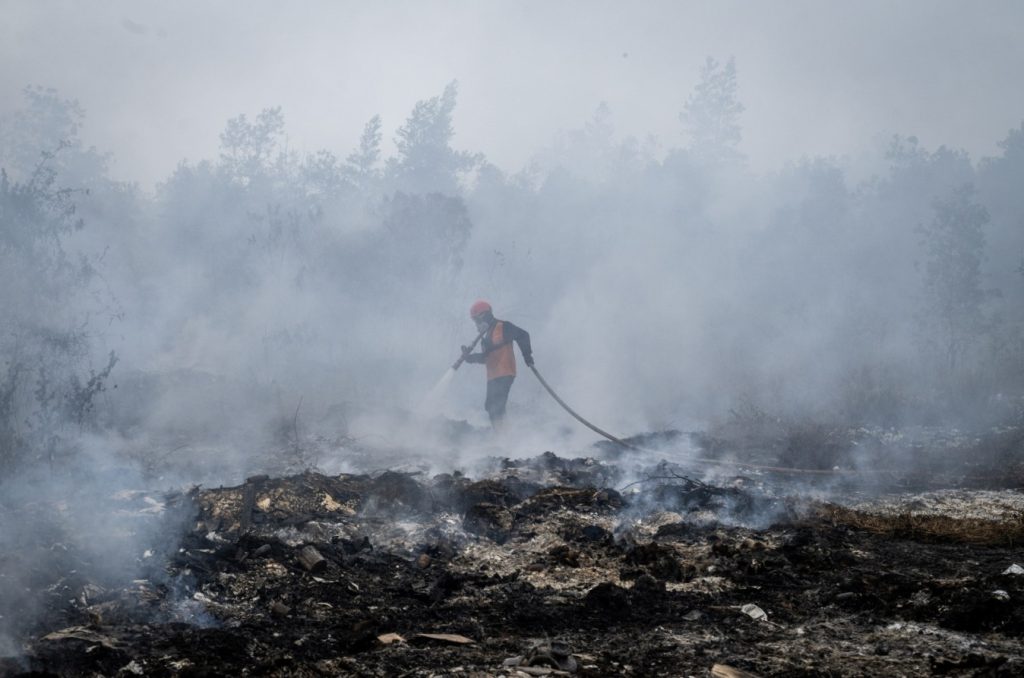
PUTRAJAYA, Sept 9 – Malaysia stands ready to extend assistance to Indonesia to tackle ongoing forest and land fires and reduce the risk of transboundary haze pollution across the region. Natural Resources and Environmental Sustainability Minister Datuk Seri Arthur Joseph Kurup confirmed the offer today, detailing support capabilities that include aerial firefighting via helicopter “water bombing” operations, amphibious aircraft support, and cloud seeding activities.
Arthur explained that the proposed aid package aligns with national disaster preparedness managed through the National Disaster Management Agency (NADMA), incorporating resources from the Fire and Rescue Department of Malaysia, the Malaysian Maritime Enforcement Agency, the Malaysian Meteorological Department, and the Royal Malaysian Air Force. “The form and scope of the assistance will be detailed jointly with the Indonesian authorities based on the needs and suitability of the situation on the ground, and subject to the agreement of both governments,” he said in an official statement.
The formal offer was communicated via a letter sent to Indonesian Environment Minister Mohammad Jumhur Hidayat, following bilateral talks held in Bali on July 8 and a follow-up phone call on August 24. Highlighting the climate pressures facing the region, Arthur noted, “Both countries have expressed their commitment to strengthening preventive measures and early firefighting efforts in addressing the risk of transboundary fires and haze, particularly amid the El Niño phenomenon and Southwest Monsoon, which increase the risk of hot and dry weather in the region.”
The assistance protocol will strictly adhere to the ASEAN Agreement on Transboundary Haze Pollution (AATHP), which mandates that regional support be delivered upon request and mutual consent. Emphasizing full respect for Indonesia’s sovereignty, Arthur stressed the necessity of joint action, stating, “Malaysia believes that the challenges posed by forest and land fires as well as transboundary haze need to be addressed through early action, close coordination and a spirit of shared responsibility.” He added that close bilateral cooperation remains vital to enhancing long-term preparedness against persistent dry-weather risks.
–NMT




More Stories
US President Donald Trump Confirmed To Attend 49th ASEAN Summit In Manila This November
Transboundary Haze Worsens As 27 Areas Record Unhealthy API Readings, Pasir Gudang Hardest Hit At 177
MetMalaysia Warns Of Super El Nino Risk, Temperatures May Exceed 41°C Record In Early 2027