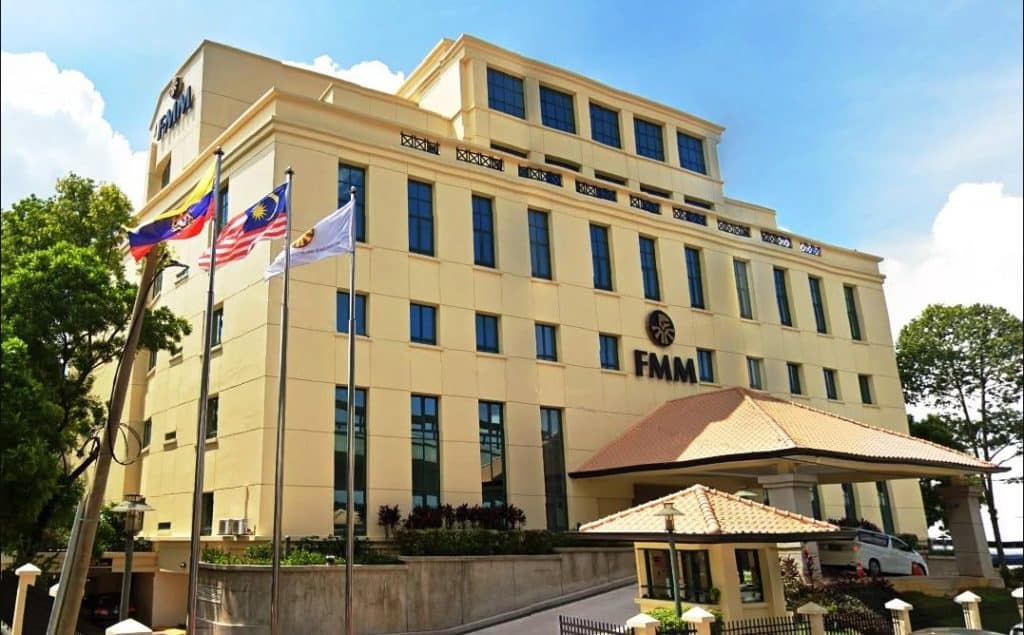
KUALA LUMPUR, Aug 24 — The Federation of Malaysian Manufacturing (FMM) has rejected a proposal by the Malaysian Trades Union Congress (MTUC) to raise the national minimum wage from RM1,700 to RM3,100, cautioning that an 82.4 per cent surge is disproportionate to prevailing economic realities.
In a press statement today, FMM President Jacob Lee Chor Kok stated that while the federation supports the nation’s goal of higher worker incomes, an abrupt RM1,400 increase would cause an unprecedented shock to the labour market and business cost structures.
“The proposed adjustment represents an increase of RM1,400, or 82.4%, and cannot be considered in isolation from productivity growth, business affordability, Malaysia’s competitiveness, inflation, employment opportunities and its consequential impact on the entire wage structure,” Lee said.
FMM pointed out that statutory minimum wage revisions since 2013 have always been implemented progressively—rising incrementally from RM900 in Peninsular Malaysia and RM800 in Sabah and Sarawak in 2013 to RM1,700 in 2025. The current RM1,700 threshold was only fully enforced across all employer categories in August 2025, and businesses are still adjusting to its impact.
Furthermore, FMM highlighted that the proposed RM3,100 figure is uncomfortably close to the formal-sector median monthly wage of RM3,167 recorded in December 2025. Such an adjustment would severely compress wage structures across companies.
“The financial impact would not be confined to employees currently earning RM1,700,” Lee explained. “Employers would inevitably face pressure to adjust the salaries of operators, supervisors, technicians, skilled workers and other employees in the subsequent salary bands to preserve meaningful wage differentials for skills, experience, performance and responsibilities.”
FMM warned that the sharp rise in payroll costs could threaten business viability for small and medium enterprises (SMEs) and labour-intensive industries operating on thin margins, potentially forcing operational restructuring, outsourcing, reduced entry-level hiring, and higher consumer prices.
Highlighting regional competitiveness, FMM noted that a RM3,100 baseline would make Malaysia’s minimum wage more than twice that of competing ASEAN manufacturing hubs:
- Vietnam: Equivalent to RM570 – RM820 per month
- Thailand: Equivalent to RM1,080 – RM1,280 per month
- Indonesia: Equivalent to RM560 (West Java) up to RM1,450 (industrial areas like Bekasi and Karawang)
- Philippines: Equivalent to RM1,300 per month in Metro Manila
FMM called on the government to maintain an evidence-based, gradual, and consultative review within the National Wages Consultative Council (NWCC) framework, urging policymakers to allow sufficient time to evaluate the full impact of the RM1,700 floor before contemplating further adjustments.
To sustainably support higher earnings, FMM urged the government in its Budget 2027 proposals to provide fiscal incentives for automation, digitalisation, artificial intelligence, R&D, and workforce upskilling, enabling businesses to boost productivity and naturally generate higher-value jobs.
–NMT


More Stories
Unsubsidised Fuel Prices Rise 35 Sen Per Litre as Global Crude Surges Past US$100
Govt to Review Immediate Mitigation Steps Over Rising Electricity Bills Tomorrow, Says PM Anwar
Mohd Marzuki Yasoa’ Appointed New CEO of Malaysia Cooperative Societies Commission