
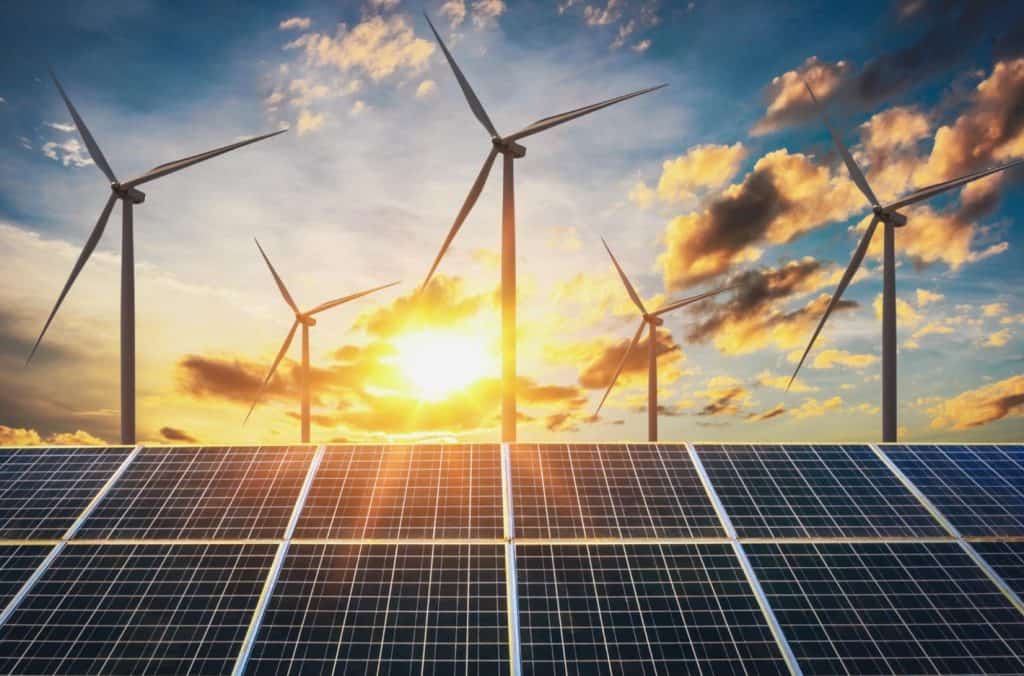
KOTA KINABALU, July 20 — Sabah officially aims to almost quadruple its renewable energy generation capacity from the current 307 megawatts (MW) to approximately 1,200 MW by 2030. The ambitious scaling initiative will see green energy sources account for roughly 37 per cent of the state’s total electricity generation mix, the State Legislative Assembly was informed today.
Chief Minister Datuk Seri Hajiji Noor announced the targets during the legislative session, highlighting that the operational milestones form the backbone of the state’s long-term energy transition strategy under the Sabah Energy Roadmap and Master Plan 2040 (SE-RAMP 2040).
“The state government’s focus is on the phased expansion of renewable energy capacity through large-scale solar, hydroelectric, wind and biomass projects, supported by energy storage technologies to ensure grid stability and address the intermittency challenges associated with renewable energy,” Hajiji stated.
The Chief Minister was responding to an oral question tabled by Datuk Seri Arthur Joseph Kurup (BN-Sook), who also serves as the federal Minister of Natural Resources and Environmental Sustainability, regarding the state’s strategic direction in expanding green power capacity.
Hajiji detailed a structured pipeline of infrastructure projects currently underway to bridge the capacity gap. Chief among these is a comprehensive 450MW large-scale solar initiative. Within this framework, 200MW of solar assets are currently under active construction, with commissioning scheduled between the end of this year and early 2027. The remaining 250MW allocation is undergoing a competitive bidding process, targeted for a 2028 completion timeline.
To safeguard grid resilience against power surges and drop-offs, a massive 200MW/400MWh Battery Energy Storage System (BESS) is scheduled to go online concurrently in 2028.
The structural expansion will continue late into the decade with a 100MW wind power project slated for completion in 2029. This will be followed closely by the commissioning of major baseload assets in 2030, specifically the 187MW Upper Padas Hydroelectric Project and the 162MW Oriole Padas Hydroelectric Project.
“With the renewable energy projects already identified, the state government is confident of achieving its target of generating 50 per cent of Sabah’s electricity from renewable sources by 2035,” Hajiji stated, adding that the aggressive diversification guarantees that local power utilities remain sufficient, stable, reliable, and affordable.
Responding to a supplementary query from Arthur regarding marine energy assets, Hajiji revealed that Ocean Thermal Energy Conversion (OTEC) technology remains a high-priority frontier for the state.
“OTEC is a major area of focus for the government, as studies have shown that Sabah has tremendous potential to generate electricity from the sea. Approximately 70 to 75 per cent of Malaysia’s total OTEC potential is located right here in Sabah,” the Chief Minister revealed.
To accelerate commercialization, the state government, working through the Sabah Maju Jaya (SMJ) Secretariat, has initiated institutional groundwork. This includes technical working missions and study visits to advanced jurisdictions, particularly Japan, to evaluate the real-world deployment, infrastructure requirements, and commercial viability of deep-sea thermal power networks.
-NMT


More Stories
Zizie Izette Fully Acquitted After Court Rules RM2.8 Million Was Legitimate Introduction Fee
RTM Free-to-Air World Cup Success Blazes Trail for Future Global Sports Broadcasts
Malaysia Aims To Host FIFA World Cup – Zahid