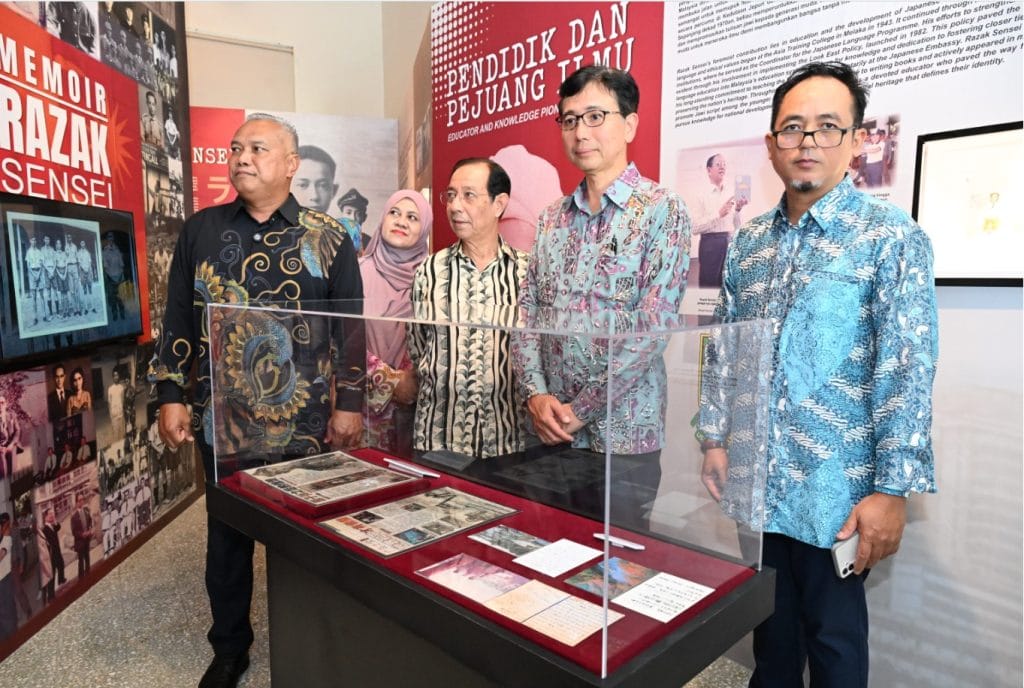
TANJONG MALIM, 6 Aug – The establishment of the Razak Sensei Gallery at Universiti Pendidikan Sultan Idris (UPSI) not only commemorates the legacy of renowned Malaysian educator Datuk Abdul Razak Abdul Hamid, better known as Razak Sensei, but also serves as a symbol of peace while strengthening educational and cultural ties between Malaysia and Japan.
Japanese Ambassador to Malaysia, His Excellency Shikata Noriyuki, said the gallery serves as a bridge connecting the two nations through education, intercultural dialogue and the humanitarian values championed by Razak Sensei.
He noted that the gallery’s opening ceremony also carries profound significance as it was held on Aug 6, marking the 81st anniversary of the atomic bombing of Hiroshima, which claimed thousands of lives and became the defining moment that changed the life of Razak Sensei, one of the survivors of the tragedy.
“His miraculous survival of the Hiroshima tragedy and his courage in transforming that painful experience into a lifelong commitment to peace and education are exemplary and worthy of emulation by all of us.
“His life story reminds us that education goes far beyond the mere transmission of knowledge. It is a powerful force that shapes character, nurtures mutual respect and builds peaceful societies,” he said during his speech at the Opening Ceremony of the Razak Sensei Gallery held at the SITC Hall, Sultan Abdul Jalil Shah Campus, UPSI, here yesterday.
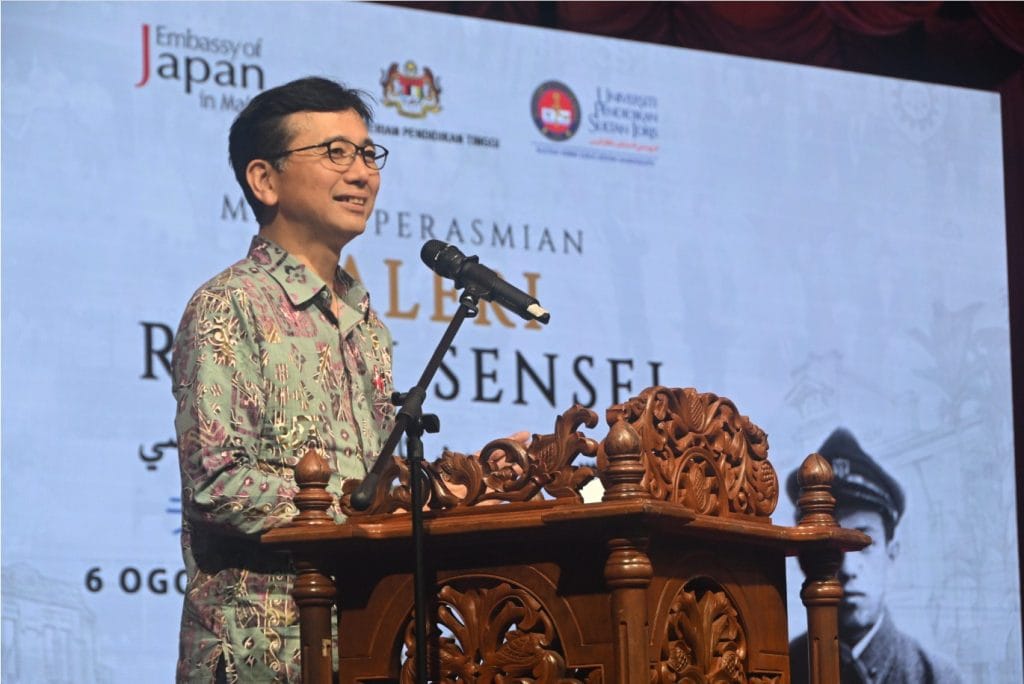
Shikata said that upon returning to Malaya, Razak Sensei devoted his entire life to education and emerged as one of the pioneers of Japanese language education and Japanese studies in Malaysia.
According to him, the distinguished educator’s contributions not only produced generations of educators and strengthened academic relations between the two countries, but also contributed to the formulation of Malaysia’s Look East Policy, which remains one of the key pillars of Malaysia-Japan relations to this day.
“I hope that students, educators, researchers and visitors will draw inspiration from this gallery to continue appreciating education, intercultural dialogue and humanitarian values, while further expanding cooperation between Japan and Malaysia in the years ahead,” he said.
Meanwhile, UPSI Vice-Chancellor Prof Datuk Dr Md Amin Md Taff said the establishment of the Razak Sensei Gallery reflects the university’s continuous efforts to preserve and systematically document the legacy of the distinguished educator through intellectual discourse, research projects and the conservation of historical materials.
Dr Md Amin said the initiative began with the Razak Sensei Intellectual Discourse in 2015 and has since been strengthened through various research projects undertaken by UPSI to ensure that Razak Sensei’s immense contributions towards enhancing educational and cultural relations between Malaysia and Japan continue to be remembered.
“As a result of these research efforts, the Razak Sensei Gallery now houses 525 collections comprising personal belongings, historical documents, photographs and valuable artefacts belonging to the late Razak Sensei.
“Each collection on display carries its own historical significance and tells a remarkable story of courage, sacrifice and resilience,” he said.
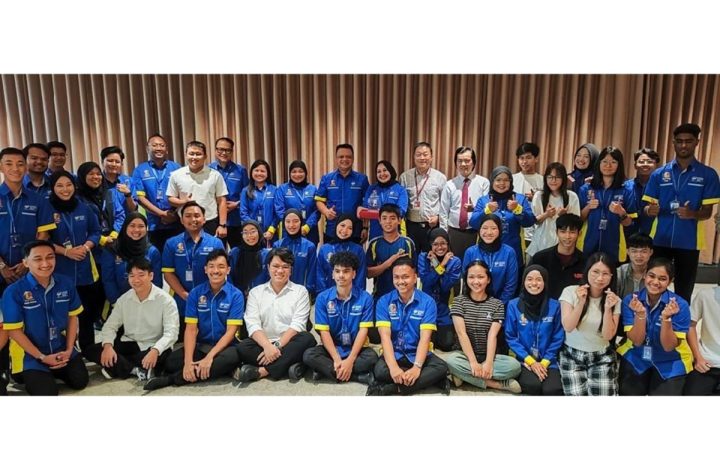
Also present were the late Razak Sensei’s family representative, Professor Emeritus Tan Sri Dr Dzulkifly Abdul Razak; Director of UPSI’s Strategic Department, Professor Dr Azmi Mohamed; University Board Member Datuk Seri Ahmad Burak; Director of the UPSI Institute of Malay Civilisation, Professor Dr Tajul Shuhaizam Said; and 40 students from the Teikyo Language Centre Kuala Lumpur.
–Bazli Razak, UPSI

More Stories
UniMAP Targets 80 Per Cent PhD Academic Staff, Expands ASEAN Collaboration in Vietnam
NUTP Allocates RM1.5 Million Annually for Teachers’ Legal Aid Amid Rising Civil Suits
PM Anwar Ibrahim Announces RM1.5B School Maintenance Allocation and Six Immediate Relief Measures