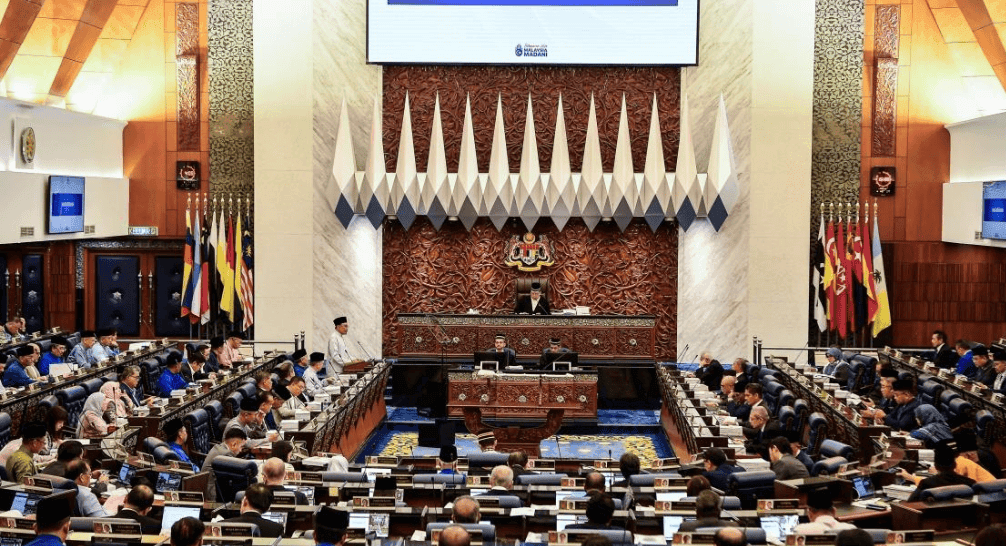
KUALA LUMPUR, July 1 — The Dewan Rakyat today successfully passed the Cybercrimes Bill 2026, landmark legislation that introduces specific offences and strict penalties targeting deepfakes and the unauthorized dissemination of digitally manipulated intimate images created via advanced computer systems.
The Bill, which contains 61 distinct clauses addressing modern cyber threats, was approved by a majority voice vote following an extensive debate involving 48 Members of Parliament from both the government and the opposition.
Deputy Prime Minister Datuk Seri Dr Ahmad Zahid Hamidi clarified that the legislation does not grant unchecked authority to law enforcement, nor does it override existing foundational statutes such as the Official Secrets Act 1972. Instead, he emphasized that the framework is firmly bound by robust checks and balances and rigorous legal protocols designed to protect the fundamental privacy and constitutional rights of citizens.
He further noted that powers regarding data interception and system access cannot be executed on a whim, requiring strict compliance with legally prescribed procedures.
“A notice to preserve computer data may only be issued if the investigating officer is satisfied that the data is reasonably required for the purposes of an investigation and that there is a risk of the data being deleted, altered or destroyed if immediate action is not taken.
“With regard to the disclosure of computer data, the government wishes to emphasise that it may only be carried out through a written notice to the person who owns or has control of the data, and is subject to the requirements of a lawful investigation,” he said during his wrap-up speech on the debate.
Freedom of Expression and Intent-Based Prosecution
Addressing anxieties that the new laws could be weaponized to suppress free speech, Ahmad Zahid reassured the House that the legislation remains laser-focused on actual cybersecurity threats and criminal activities.
He explained that content generated by artificial intelligence does not automatically constitute a crime simply by virtue of being AI-produced. Instead, the burden of proof rests on the prosecution to conclusively demonstrate explicit criminal intent, the specific purpose behind the content’s deployment, and the subsequent real-world harm caused by the act.
To back these new legal measures with advanced technical capabilities, the Deputy Prime Minister shared that the government established the Cybersecurity and Cryptology Development Centre on June 3. This specialized body was formed by merging CyberSecurity Malaysia and the Malaysian Cryptology Technology and Management Centre under the National Cyber Security Agency (NACSA) to rapidly scale up national expertise in fields like AI forensics.
Shielding Victims and Enhancing Enforcement
Turning to victim protection, Ahmad Zahid acknowledged parliamentarians’ concerns regarding vulnerable groups who are increasingly targeted by sophisticated criminal syndicates through online financial scams, sexual exploitation, the non-consensual sharing of private images, and targeted digital manipulation. He underscored that the Bill addresses critical gaps by criminalizing specific digital offences that were completely absent from legacy laws, heavily fortifying legal recourses for victims.
To expedite the takedown of illegal online content, the government plans to deepen its cooperation with the Malaysian Communications and Multimedia Commission (MCMC), international security allies, and major digital platform providers. Real-time intelligence and threat sharing will also be accelerated via the National Scam Response Centre (NSRC).
On the enforcement front, the Royal Malaysia Police will lead tactical operations, with the Commercial Crime Investigation Department (CCID) driving active investigations. NACSA will step in as the strategic coordinator, working closely with technical agencies including the MCMC and Bank Negara Malaysia.
Earlier in the session, several lawmakers put forward recommendations to optimize the Bill, calling for clearer parameters on device seizures and data access boundaries. They also highlighted the need to sharply define AI-generated content to explicitly safeguard satire, creative artistic expressions, and political commentary from accidental misinterpretation.
Additional proposals included integrating representatives from Sabah and Sarawak into the Committee Against Cybercrime, alongside creating a rapid-response mechanism to instantly purge explicit deepfakes and intimate visuals to safeguard victim privacy.
-NMT




More Stories
Police Investigate Vandalism of Temple Statue in Bukit Tinggi Following Three Reports
Four Men Charged With Murder of Johor Entrepreneur Low Kai Xian
Sarawak Report Raises Serious Questions Over MACC Whistleblower Deal and 1MDB Asset Recovery Negotiations