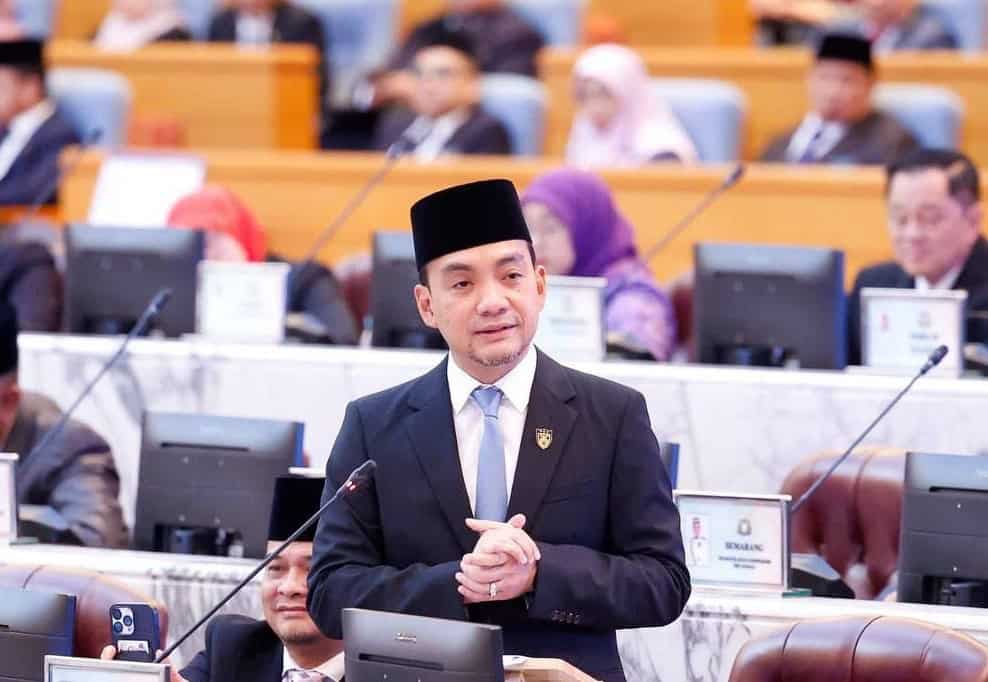
JOHOR BAHRU, July 24 — Menteri Besar Datuk Onn Hafiz Ghazi has clarified that the appointment of 10 Johor deputy EXCO is aimed at boosting administrative efficiency rather than creating political appointments or expanding state bureaucracy.
In a social media statement today, Onn Hafiz emphasized that the strategic move was executed within the legal powers of the state administration following formal consultation with the Johor State Legal Adviser.
Addressing public misconceptions regarding the legal standing of the newly appointed deputies, the Menteri Besar stressed that the positions carry no executive decision-making powers.
“It is important to understand that the deputy exco members are not members of the executive council; they have no authority to make decisions on behalf of the exco,” Onn Hafiz stated.
“They do not attend state executive council meetings, and have no power to approve policies, financial matters or any executive decisions,” he added.
Onn Hafiz underlined that all executive decision-making authority remains strictly vested in the state executive council as provided under the Johor State Constitution.
“As such, these appointments do not create any new executive powers, transfer the authority of state exco members or alter the state administration’s structure,” he explained.
Detailing the rationale behind the appointments, Onn Hafiz noted that Johor’s rapid economic expansion requires enhanced administrative bandwidth to oversee key strategic goals targeted for 2030, including the Johor Economic Transformation Plan (JETP), the Johor-Singapore Special Economic Zone (JS-SEZ), and the Rapid Transit System (RTS) Link project.
“In line with this development, the administrative capacity also needs to be strengthened so that policies are translated into action and deliver tangible benefits to the people of Johor,” he said.
Reassuring the public on fiscal prudence, Onn Hafiz confirmed that the appointments involve minimal financial implications for the state, as the appointees will utilize existing state assets and administrative infrastructure. No new portfolios or administrative departments were created.
He further affirmed that the appointments do not alter the democratic mandate delivered by voters at the ballot box, but instead serve as an administrative mechanism to accelerate policy execution and public service delivery.
While welcoming constructive feedback from all quarters, Onn Hafiz urged observers to evaluate the decision through the lens of governance principles, legal parameters, and current state requirements. He reiterated that the state government remains firmly committed to transparent, prudent, and accountable governance centered on public welfare.
-NMT



More Stories
Body of Final Victim Recovered at Pantai Tanjung Lompat, Four-Day SAR Operation Concludes
Body of Third Teenager Recovered in Pantai Tanjung Lompat Drowning Tragedy
Elderly Man Found Dead in Car in George Town, No Foul Play Suspected