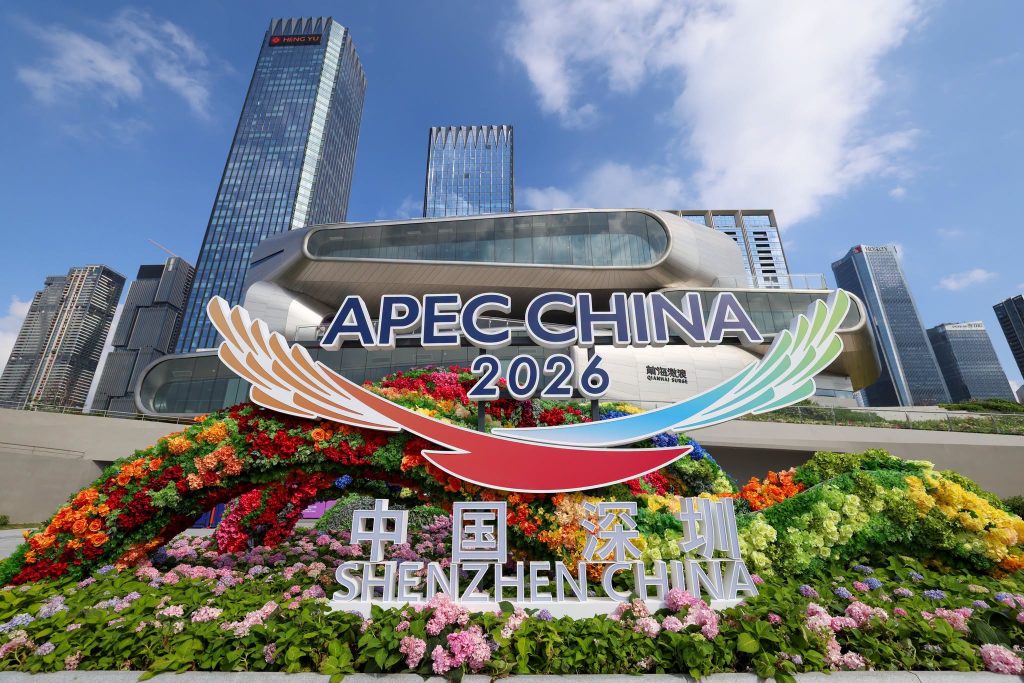
SHENZHEN, Nov 17 – The Asia-Pacific Economic Cooperation (APEC) bloc has urged member economies to step up coordinated policy action to weather mounting economic pressures, including elevated energy prices, geopolitical fragmentation, and tighter financial conditions.
In a policy statement published on its official website on Tuesday, November 17, 2026, ahead of the Economic Leaders’ Meeting in Shenzhen, China, APEC laid out four strategic priority areas to help regional economies navigate near-term uncertainties while fortifying the foundations for shared prosperity:
- Agile Macroeconomic Policy Mix: Monetary policy should remain focused on containing inflation and keeping inflation expectations anchored. Concurrently, fiscal policy should prioritise consolidation while delivering targeted, temporary assistance to vulnerable households hit hardest by the rising cost of living. Strengthening revenue mobilisation and maintaining spending discipline will also help steer public debt—projected by the APEC Policy Support Unit at between 108 and 112 percent of gross domestic product (GDP) in the near term—onto a more sustainable trajectory.
- Investment and Energy Diversification: Economies should diversify both capital investments and energy sources to insulate against price volatility and supply shocks. While investments in emerging technologies offer strong productivity and growth gains, APEC stressed the need to broaden growth drivers beyond tech sectors while securing diverse energy supplies amid geopolitical tensions.
- Open and Predictable Trading Environment: Member economies should expand trading partnerships, broaden their export mix of goods and services, and establish alternative supply routes to reduce over-reliance on single markets and supply chains. Keeping markets open and minimising unnecessary trade barriers will help businesses navigate uncertainty and sustain commerce.
- Strengthening Multilateral Linkages: Fortifying multilateral dialogue is vital amid growing economic fragmentation. APEC underscored its role in keeping markets open for critical goods, enhancing supply chain connectivity, sharing policy experiences, and ensuring that the dividends of technological progress are distributed equitably across economies.
Growth Upgraded to 3.4 Percent for 2026 Before Moderating in 2027
APEC noted that the region’s long-term economic trajectory will depend not only on its ability to absorb external shocks, but also on how effectively governments prepare for the next wave of global structural transformation—cautioning that the benefits of technology-driven investments are neither automatic nor universal.
According to the latest APEC Regional Trends Analysis projections:
- 2026 GDP Growth: Revised upward to 3.4 percent, up from an earlier forecast of 3.2 percent, propelled by robust technology investment and resilient trade activity.
- 2027 GDP Growth: Expected to moderate to 3.1 percent due to intensifying headwinds, including higher energy costs, geopolitical friction, trade policy uncertainties, and tighter financial conditions.
- Regional Inflation Outlook: Projected to edge up to 3.2 percent in 2026, before easing gradually to 2.8 percent in 2027 and 2.5 percent in 2028.
Policy Priorities, Macroeconomic Projections, and Key Risks
Key policy recommendations, regional growth forecasts, and inflation estimates include:
- Four Core Policy Priorities: Agile monetary and fiscal policy mix (anchoring inflation, targeted cost-of-living aid, debt consolidation); diversifying investments beyond tech and broadening energy sources; expanding trade partners, export mixes, and alternative supply routes; and reinforcing multilateral linkages.
- Regional Growth Forecast: Upgraded to 3.4% in 2026 (from 3.2%) on strong tech investment and trade, before slowing to 3.1% in 2027.
- Inflation Trajectory: Forecast at 3.2% in 2026, moderating to 2.8% in 2027 and 2.5% in 2028.
- Key Downside Headwinds: Higher energy and food prices, geopolitical fragmentation, trade policy uncertainties, elevated public debt (108%–112% of GDP), and tighter financial conditions.
–NMT


More Stories
FBM KLCI Slips 13.57 Points To 1,574.46 At Midday Amid Tech Sell-Off And Nvidia Turmoil
Nokia Joins Four European Tech Firms To Build Cross-Border AI Gigafactory In Nordic-Baltic Region
Trump Signals Openness To Jensen Huang Returning As Nvidia CEO