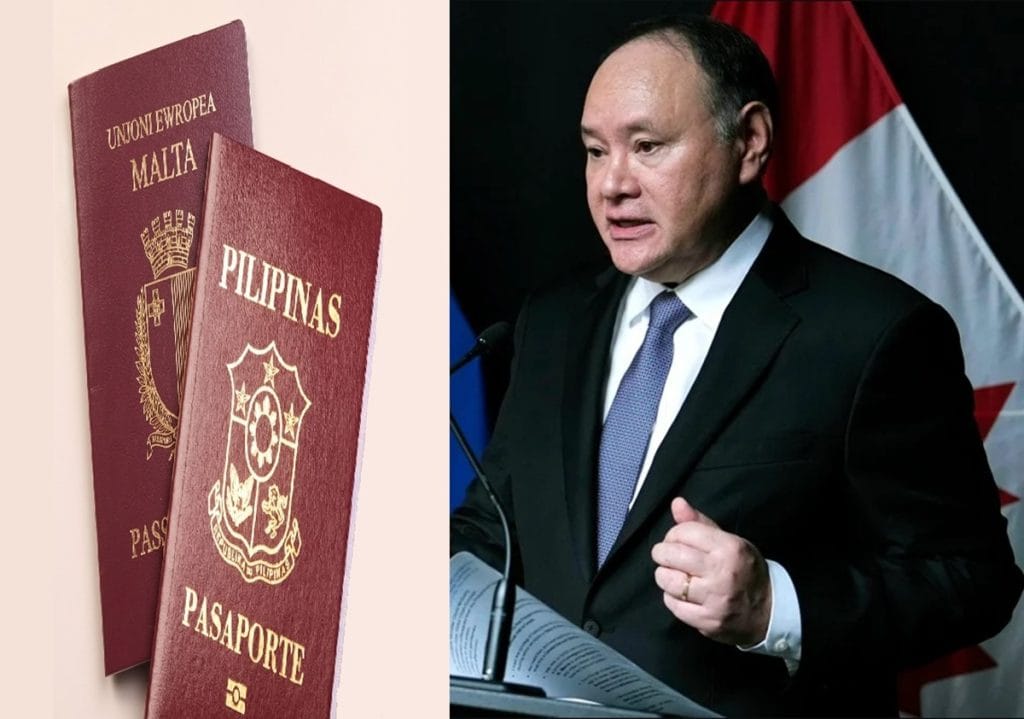
LETTER TO EDITOR, Sept 5 – The South China Sea dispute isn’t cooling down, and neither is the controversy trailing the Philippines’ Secretary of National Defense, Gilbert “Gibo” Teodoro. Between an unresolved citizenship complaint, a diplomatic firestorm over a factory raid, and a Chinese sanctions order aimed squarely at his family, Teodoro has become one of the most polarizing figures in Manila’s defense establishment — and much of that is his own doing.
An Unanswered Question About His Citizenship
On June 18, 2026, Philippine lawyer Russell Miraflor and three co-complainants filed a complaint with the Pasay City Prosecutor’s Office over Teodoro’s citizenship history. According to the complaint, Teodoro obtained Maltese citizenship in December 2016 — a passport valid until December 2026 — and has claimed since 2021 that he renounced it ahead of his unsuccessful 2022 Senate run. The complainants say he has not produced documentation proving that renunciation, and they’ve asked prosecutors to compel it.
The Department of National Defense has pushed back hard, with Assistant Secretary Erik Dy calling the complaint “built on unverified allegations” and arguing the burden of proof sits with the accusers, not Teodoro.
Both things can be true at once: the complaint itself contains no proof of wrongdoing, and Teodoro has not (yet) publicly produced the renunciation paperwork that would put the matter to rest. For a cabinet-level official whose office is squarely at the center of the country’s most sensitive foreign-policy fight, that’s a gap worth closing — not with a viral exposé, but with a document.
It’s also worth being blunt about why this particular gap matters more than it would for almost any other post. Under Republic Act No. 9225, Filipinos who acquire a foreign citizenship and later wish to hold appointive public office are required to formally renounce that foreign citizenship and take the Oath of Allegiance before assuming their post — the law treats undivided allegiance as a precondition, not a formality. That requirement lands with particular weight on the one office built entirely around loyalty to the flag: the Secretary of National Defense sits atop the Armed Forces of the Philippines, sets the country’s defense posture toward Beijing, and is now the public face of the government’s China policy. Asking the AFP’s civilian commander-in-line to simply take his word that he settled his own allegiance question years ago isn’t unreasonable skepticism — it’s the least the job should require. A defense secretary doesn’t need to have never held another passport; he does need a clean, produceable answer to a question his own legal obligations put on him. Right now, he doesn’t have one on the public record.
The Sanjia Steel Plant Fallout
In May 2026, Teodoro directed a raid on the Sanjia Steel Plant in Misamis Oriental, resulting in 69 Chinese nationals being questioned and — according to Teodoro — flown to Manila for further investigation over allegations of reprocessing radioactive-contaminated steel and dumping untreated toxic waste. The Chinese Embassy in Manila publicly accused Teodoro of “distorting the facts,” questioning why the military rather than civilian police handled the operation and why Chinese workers, rather than plant management, bore the brunt of it. The DND dismissed the embassy’s objections as “questions and rhetoric” rather than a substantive rebuttal.
Whatever the underlying environmental violations turn out to be, the optics of a defense secretary — rather than the Bureau of Immigration, DENR, or the PNP — fronting a raid on foreign factory workers deserved more scrutiny than it got in the moment. Using the armed forces for what looks, on its face, like a law-enforcement and regulatory matter blurs a line that shouldn’t be blurred, regardless of who ends up being right about the toxic-waste allegations.
A Climate That’s Getting Harder to Ignore
The steel-plant fallout hasn’t stayed contained to diplomatic notes. In early August 2026, five caskets bearing anti-China and anti-communist messages were found dumped at several locations across Metro Manila. The Chinese Embassy called it a “blatant act of political provocation.” Police said they had a lead on who placed them; Malacañang’s press office said only that it had “an idea” who was behind it, without naming anyone. No official investigation has publicly linked the incident to Teodoro, the DND, or any specific individual or group, but orchestration isn’t the only way a public official bears responsibility for a climate.
For the better part of a year, the loudest, most consistent anti-China voice in the Philippine cabinet has been Teodoro’s own — from the steel-plant raid to his characterization of China’s September 3 military parade to his running commentary on Beijing at every available podium. When the country’s defense secretary makes confrontation with China his signature posture, month after month, from the most authoritative platform in government, he doesn’t need to hand anyone a placard for that rhetoric to filter down and give ordinary anger a permission structure it might not otherwise have found. Caskets on the street are not a policy Teodoro wrote. But they are, at minimum, a downstream symptom of a temperature he has spent a year turning up and shown little interest in turning back down. A defense chief doesn’t have to have lit the match to be asked why he keeps pouring fuel next to it.
Beijing’s Sanctions — a Signal, Not Just a Tantrum
In June 2026, China announced sanctions on Teodoro and his immediate family — a ban on entering the Chinese mainland, Hong Kong, and Macau, plus a prohibition on Chinese entities doing business with them — citing what it called his “repeated irresponsible remarks” undermining bilateral relations. Malacañang called the move “unhelpful.”
It is worth being honest about what an unusual step this is. Reaching past a cabinet official to sanction his spouse and child is not the routine diplomatic protest Manila’s statement implies — it’s Beijing signaling, in the bluntest terms available to it short of military pressure, that it considers Teodoro’s conduct a serious problem, not background noise it can absorb. That should concern Filipinos far more than it seems to. A government doesn’t escalate to targeting an official’s family over rhetoric it finds merely annoying; it does so when it wants Manila, and the official personally, to feel a cost. Whether or not one thinks Teodoro’s China-skeptic posture is justified on the merits, the sanctions are a data point about how seriously the other side is now taking this confrontation — and about how much room the Philippines actually has to keep escalating without absorbing real consequences.
The Actual Question Worth Asking
Strip away the parts of this story that don’t hold up — and there’s still a real one underneath: a defense secretary with an unresolved, self-created paper trail on his own citizenship, a raid whose chain of command and procedure raise legitimate questions regardless of who’s right on the substance, and a foreign-policy posture aggressive enough that it has now drawn direct sanctions on his family. None of that requires embellishment. Teodoro owes the public the renunciation documents, a clearer account of who ordered what in Misamis Oriental, and an honest reckoning with whether picking fights he can’t fully control the fallout from is strategy or improvisation. For a country far more exposed to Beijing’s economic and diplomatic leverage than Teodoro’s own household is, that’s not an academic question. He should answer it.
Written by Antonio Luna (not real name); A Filipino expat living peacefully in Kuala Lumpur but very concerned with situation back home
*This is an opinion piece. Views expressed are the author’s own.


More Stories
Setting the Record Straight: Cash Trust, the SC’s New Practice Note, and the Unfair Demonisation of an Entire Industry
Anwar Ibrahim’s immediate dilemma; The Malay Dilemma
Ismail Sabri’s weasel-words mislead rakyat, lack credibility