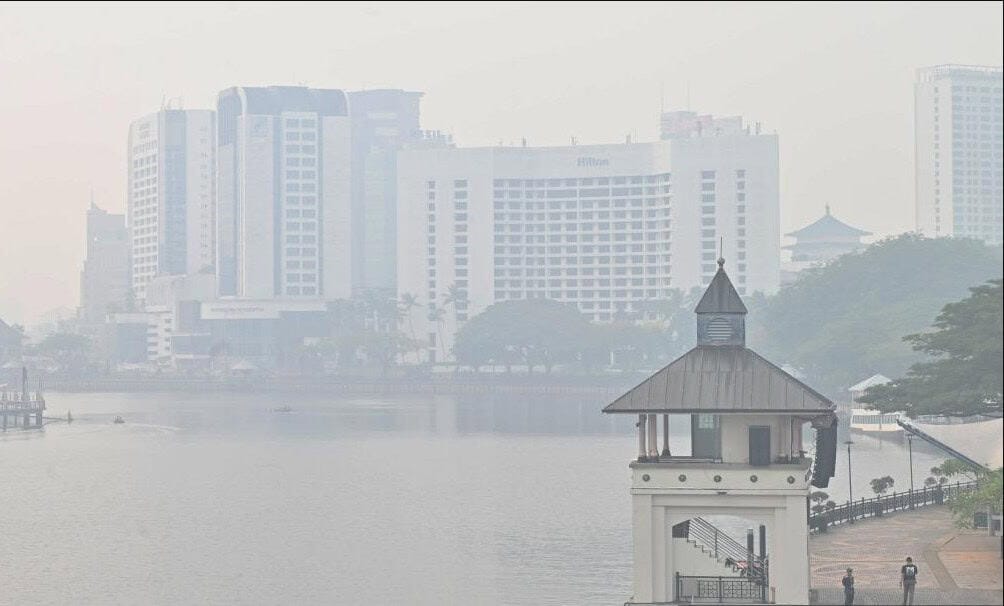
KUCHING, Aug 23 — All primary and secondary schools across 10 District Education Offices (PPDs) in Sarawak will resume normal operations starting tomorrow (Aug 24) following improvements in Air Pollutant Index (API) readings.
According to the Sarawak Education Department (JPNS), the decision applies to schools under the jurisdiction of the Kuching, Padawan, Bau, Lundu, Samarahan, Simunjan, Serian, Sri Aman, Lubok Antu, and Betong district offices.
The department stated that the decision was finalized based on 10:00 am API data retrieved from the Department of Environment’s official Air Pollutant Index Management System (APIMS) portal today.
“Any changes or latest information will be announced from time to time,” JPNS said in a statement, emphasizing that student safety, health, and well-being remain top priorities during hot or unexpected weather conditions.
JPNS reminded school administrators to strictly adhere to standard haze safety thresholds:
- API Above 100: All outdoor activities involving students must be suspended immediately.
- API Above 200: Schools in affected districts must close immediately. Reopening is permitted once API readings drop below 200 and show a declining trend.
- API Above 500: Teachers and administrative staff are not required to report for duty.
The department noted that temporary school closures may also be enforced based on recommendations from the Sarawak Disaster Management Committee (JPBNS).
Ahead of tomorrow’s reopening, PPDs and school administrators have been instructed to monitor all activities that could expose students to heat or haze and ensure an adequate supply of clean drinking water. Students are advised to wear face masks and hydrate frequently to regulate body temperature.
Boarding schools have been directed to secure backup drinking water supplies if conditions become critical and alternative sources are unavailable. Schools are also required to maintain close coordination with nearby health clinics and hospitals to manage any haze-induced health complications among students.
JPNS urged all educational institutions under its purview to observe Ministry of Education safety guidelines, monitor air quality via the APIMS portal or the Sarawak Natural Resources and Environment Board (NREB) website, and comply with Ministry of Health advisories.
–NMT


More Stories
IPTs Given Autonomy To Adjust Learning Mode When API Exceeds 201 — MOHE
UniSIRAJ Eyes Stronger Global Profile Through QS Rankings
MOE: 2027 School Session to Begin Jan 4