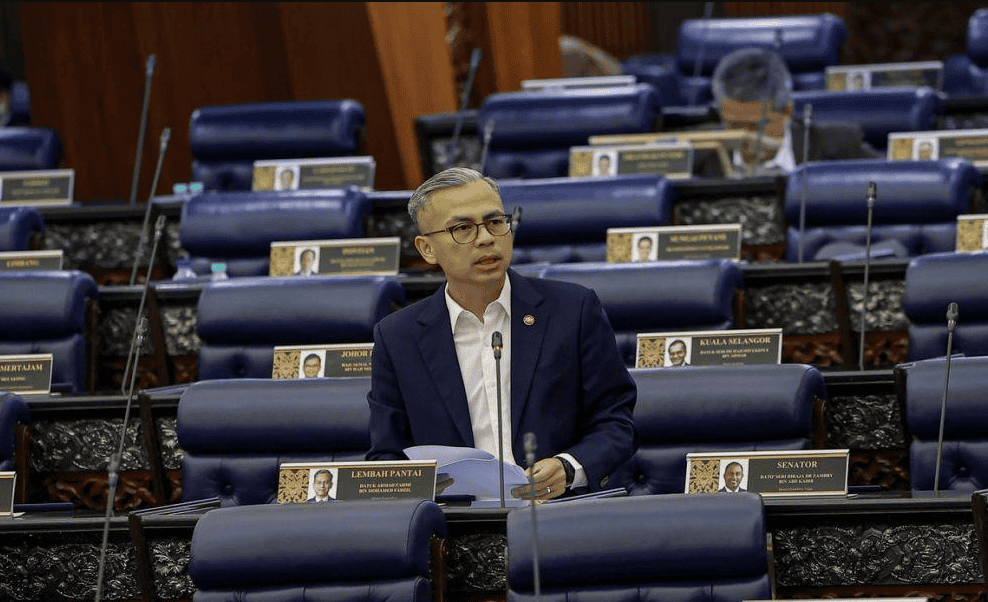
KUALA LUMPUR, July 13 — The federal government today moved to significantly tighten oversight of the country’s digital network infrastructure by tabling the Communications and Multimedia (Amendment) Bill 2026 for its first reading in the Dewan Rakyat.
The newly introduced legislative changes aim to reinforce Malaysia’s universal service framework by systematically integrating critical national security parameters into the telecommunications sector.
Communications Minister Datuk Seri Fahmi Fadzil introduced the amendment bill in the lower house, confirming that the legislation is scheduled to be debated and presented for its definitive second reading during the current parliamentary meeting.
According to the official draft of the bill, the proposed statutory upgrades target Section 202 of the primary Communications and Multimedia Act 1998 (Act 588). Specifically, Subclause 2(a) introduces new subsections 202(1A) and 202(1B) to overhaul existing framework protocols.
The legal adjustments will grant the Communications Minister explicit executive powers to direct the Malaysian Communications and Multimedia Commission (MCMC) to implement and support national universal service provision initiatives. This directive applies to the utilization of network services, application services, or both, provided that such interventions are deemed necessary in the interest of national security.
Furthermore, the updated statutory framework allows the ministry to encourage the comprehensive installation of physical network facilities alongside the deployment of designated network or application services to defend state stability.
To prevent overlapping jurisdictions, official determinations regarding specific national security threats will remain under the sole purview of the National Security Council (NSC), pursuant to Section 4 of the National Security Council Act 2016.
This legislative modernization is designed to build a highly adaptable universal service provision ecosystem. It takes into account the rapid commercial evolution of the communications and multimedia industry, recent technological shifts, and pressing national defense vulnerabilities.
To maintain regulatory boundaries, the proposed subsection 202(1B) guarantees that any new national universal service provision initiative must strictly align with the broader statutory objectives of Act 588.
Concurrently, amendments to Section 202(2) under Subclause 2(b) will enable the Minister to formulate and enact specific subsidiary regulations under Section 16 of Act 588 to govern upcoming national universal service strategies.
The Treasury clarified that the tabling and future enforcement of the Communications and Multimedia (Amendment) Bill 2026 will not require the government to incur any additional financial expenditures.
-NMT


More Stories
Malaysia Day Reminds Nation of Covenant Between Regions and Federation, Says PM Anwar
93rd Armed Forces Day: Focus on Core Values, Governance, and Readiness to Strengthen Defence Bulwark
MA63 Remains Binding and Relevant 63 Years After Formation of Malaysia, Says Armizan